The International SEO Agency for SaaS, Fintech and B2B Brands
Expanding into a new market is a search problem before it is a sales problem. Buyers in Berlin, Dubai and Singapore search in their own words, compare local competitors and trust different signals. Your website has to meet them there.
Ballistic Media plans, builds and grows your search presence market by market: local keyword research, hreflang and site architecture, localised content, local authority and visibility in AI answers. One team, from the strategy to the code that ships it.
International SEO is how a website becomes findable, credible and persuasive to buyers outside its home market: in their search engine, in their language and, increasingly, in the AI answers they read before they click anything.
6bn6bn
people used the internet in 2025, about three-quarters of the world. Most of them do not search in English.
of Google visits ended in a click on a result when an AI summary appeared, against 15% without one. Being cited in the answer now matters as much as ranking.
Take the full programme or only the part you are missing. Every piece is planned around your target markets, not adapted from a single-market playbook.
International SEO Audit
A crawl of every market version: hreflang, canonicals, indexing, duplicate content, redirects and speed, plus a competitive gap analysis for each target country.
Market & Keyword Research
Native-language research per market: what buyers search, the intent behind it, who already ranks and how big the opportunity is.
Site Architecture & Hreflang
The right structure for your business, hreflang in HTML, sitemaps or headers, x-default, language selectors and geo-redirect rules that never hide pages from search engines.
Localisation & Content
Landing pages, metadata and guides written for local search intent, with a glossary and brand voice that stay consistent across languages.
AI Search in Every Market
Answer engine and generative engine optimisation (AEO and GEO), so you are cited in Google AI Overviews, ChatGPT, Perplexity and Gemini in each language.
Multilingual Builds & Migrations
Multilingual sites on Webflow Localization or Next.js, built by our own developers, with URL mapping and redirects planned so no ranking is lost in the move.
International Authority
Market-specific digital PR, partner and directory listings, and relevant local links that make you credible to search engines in each new country.
Reporting by Market
Dashboards split by country and language: rankings, organic traffic, AI-answer visibility, leads and pipeline, so investment follows results.
Most international SEO problems start with the URL structure. It decides how authority flows, how fast you can open a market and how clearly search engines understand who each page is for.
Country domains (ccTLD)
example.de
Country signal3 of 3
Shared authority1 of 3
Cost and effort3 of 3
The strongest country signal and local trust, but each domain builds authority from zero and costs more to run.
Best for: When you have local entities, teams and budget in each country.
Subfolders
Usual pick
example.com/de/
Country signal2 of 3
Shared authority3 of 3
Cost and effort1 of 3
Every market shares one domain's authority, it is simple to manage, and new markets launch quickly.
Best for: Our default for most SaaS, fintech and B2B brands.
Subdomains
de.example.com
Country signal2 of 3
Shared authority2 of 3
Cost and effort2 of 3
Useful when a market runs on separate infrastructure, but authority is shared less reliably than with subfolders.
Best for: When a regional site has to sit on a different platform.
Then tell search engines which page is for whom.
Hreflang tells Google which language and country each version serves. Every version must list itself and all its alternates, and an x-default catches everyone else. Google does not use the HTML lang attribute for this, so without hreflang it guesses.
We plan market priorities with you from search demand, competition and where your team can actually sell. Google leads in most of these markets, and we also optimise for Bing, whose index powers Microsoft Copilot, and for the AI assistants buyers use in each language.
Languages: English and Arabic, including right-to-left layouts
India
Pan-India
Languages: English and Hindi
APAC
SingaporeAustraliaNew Zealand
Languages: English
Localisation
Localisation, not translation.
The same need is searched in different words in every market, and sometimes in different words within one language.
Translate your English keywords and you target terms local buyers rarely type. The page is accurate, but nobody finds it.
So we research each market first, then write for what local buyers search, the questions they ask and the proof they expect, in one brand voice across every language.
How the same buyer need is searched in the US, the UK and Germany
The buyer needs
USUS search
UKUK search
DEGerman search
A bank account for everyday spending
checking account
current account
Girokonto
Software to bill clients
invoicing software
invoicing software
Rechnungsprogramm
A workplace retirement plan
401(k) provider
workplace pension provider
betriebliche Altersvorsorge
Paying for something in instalments
buy now, pay later
buy now, pay later
Ratenzahlung
Highlighted terms differ from the US wording: a page written only for the US phrasing misses them.
Our approach
Your first 90 daysin a new market
A typical market-entry programme. Timings shift with the size of the site and the number of languages, but the order rarely does: research first, structure second, content and authority on top.
Step #1 · Weeks 1–2
Audit and market priorities
We audit every existing market version and agree which countries and languages come first, based on demand, competition and where your sales team can actually close.
We audit every existing market version and agree which countries and languages come first, based on demand, competition and where your sales team can actually close.
Step #2 · Weeks 2–4
Market research and keyword map
Native-language keyword research and competitor analysis for each market, turned into a page-by-page map so every URL has one clear job.
Native-language keyword research and competitor analysis for each market, turned into a page-by-page map so every URL has one clear job.
Step #3 · Weeks 3–6
Architecture, hreflang and technical fixes
We set the URL structure, implement hreflang and canonicals, fix indexing and redirects, and make sure each version loads fast in the market it serves.
We set the URL structure, implement hreflang and canonicals, fix indexing and redirects, and make sure each version loads fast in the market it serves.
Step #4 · Weeks 5–10
Localised pages and content
Priority pages are localised or written for each market first: product and service pages, then comparison and guide content that captures research-stage searches.
Priority pages are localised or written for each market first: product and service pages, then comparison and guide content that captures research-stage searches.
Step #5 · Weeks 8–12
Authority and AI visibility
Local digital PR and listings start, and we set a baseline for how often AI answers in each language mention you, then work to raise it.
Local digital PR and listings start, and we set a baseline for how often AI answers in each language mention you, then work to raise it.
Step #6 · Month 4 onwards
Measure, refine, expand
Monthly reporting by market shows what is working. We double down there, fix what is not, and use the same playbook to open the next market.
Monthly reporting by market shows what is working. We double down there, fix what is not, and use the same playbook to open the next market.
Selected work
Workbuilttotravel.
Launches and rebuilds for brands selling beyond their home market, where search, AI visibility and the website had to work as one system.
Need a multilingual website built or migrated as well? Our Webflow and Next.js team can do it alongside the SEO work.
Your team
Seniorpeopleoneveryaccount.
Your strategy is set and reviewed by the people below, with our SEO specialists, writers and in-house developers doing the work alongside them.
Utsav Kataria
Co-Founder
A front-end developer and SEO expert with 7+ years across marketing, SEO, technical builds and scaling growth, with qualifications in accounting, economics and law. Utsav leads site architecture, hreflang and migration work, the structural fixes international SEO depends on.
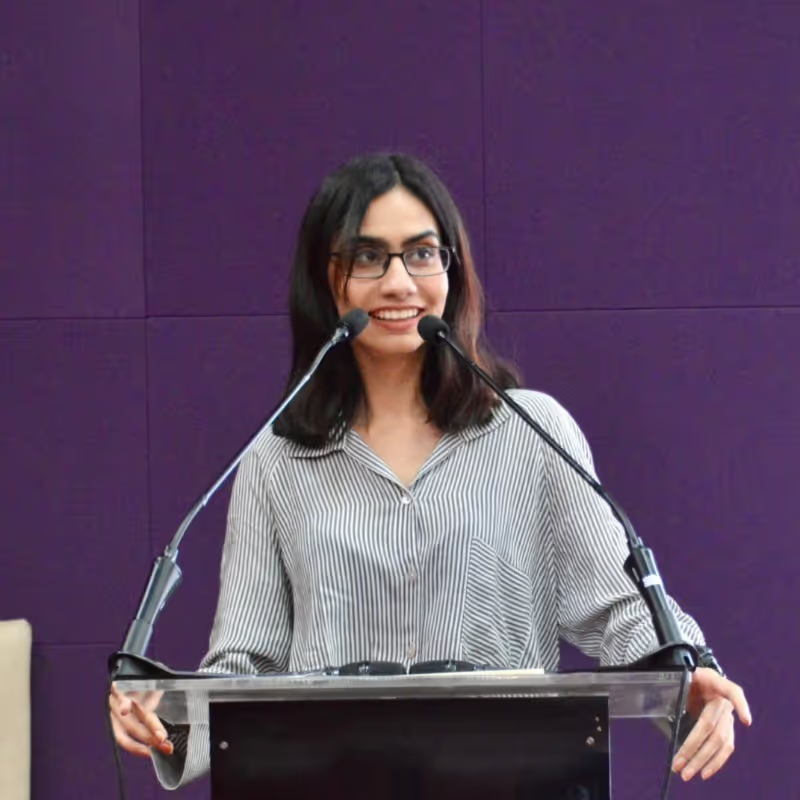
Simran Kataria
Digital Growth Strategist
Simran has led SEO, AEO and GEO strategy at Ballistic Media for three years, for SaaS, fintech and large B2B companies. Her master's in organisational psychology shapes how she plans content around the way buyers research and decide.
In our clients' words
Enoughaboutus.
“Our leads tripled in just six months. The team's strategy and hands-on support made all the difference.”
“We sell in more than 50 countries. Ballistic built our global website and our sites for Germany and Australia, and they didn't just translate them. They localised each market for the way people actually search there.”
An international SEO agency helps a website rank in several countries or languages. That covers keyword research in each market, choosing a site structure, implementing hreflang so search engines show the right version in each country, localising content, building authority in each market and, increasingly, making the brand visible in AI-generated answers. At Ballistic Media, the same team also builds and migrates the website itself.
02What is the difference between international SEO and multilingual SEO?
International SEO is about ranking in different countries; multilingual SEO is about ranking in different languages. Many brands need both. A company targeting the US and the UK needs international SEO in one language, while a company targeting Germany, France and Spain needs international and multilingual SEO together.
03Do I need international SEO?
You probably do if you sell in more than one country, have country or language versions of your site, see a meaningful share of traffic from abroad, or plan to expand. Warning signs include the wrong country's page ranking, translated pages that are not indexed, and international traffic that does not convert.
04Should I use a ccTLD, a subfolder or a subdomain?
A country domain (example.de) sends the strongest country signal but splits authority and costs the most to run. Subfolders (example.com/de/) keep all authority on one domain and are the right default for most SaaS and B2B brands. Subdomains (de.example.com) sit in between. Whatever you choose, every version should reference the others with hreflang.
05What is hreflang and why does it matter?
Hreflang is an annotation, in the HTML, an XML sitemap or HTTP headers, that tells search engines which language and country each version of a page is for. Each version has to list itself and every alternate. Without it, search engines guess, and often show the wrong version or treat versions as duplicates. Google does not use the HTML lang attribute for this.
06Can you fix international SEO on Webflow or Next.js?
Yes. We build and fix multilingual sites on Webflow, including Webflow Localization, and on Next.js. That includes URL structures, hreflang, sitemaps, language selectors and migrations with full redirect maps.
07Is translating my website enough?
No. Translation gives you accurate words, but not necessarily the words local buyers search for. A UK buyer looks for a 'current account' where a US buyer searches for a 'checking account'. Localisation starts with research in each market, then writes for that intent.
08Who writes the content for each market?
Content is planned by our SEO team from market-level keyword research, written for local search intent and reviewed in the target language before it is published. Your team approves product claims and anything regulated.
09How does AI search change international SEO?
Buyers now ask ChatGPT, Perplexity, Gemini and Google's AI Overviews in their own language, and those answers cite brands that are clearly described and visible in that market. We add answer-first content, structured data and consistent brand information in each language, and track how often AI answers mention you.
10Which countries and languages do you work in?
Most of our international work covers the US and Canada, the UK and Ireland, Europe (including German, French, Dutch and Nordic markets), the Middle East, India, Southeast Asia and Australia and New Zealand. We plan market priorities with you based on demand, competition and where you can sell.
11How much does an international SEO agency cost?
It depends on the number of markets and languages, the size and state of your site, and how much content is needed. A one-off international SEO audit is a fixed fee; opening a new market is usually scoped as a 90-day sprint; ongoing multi-market programmes run as a monthly retainer. We send a written proposal after a scoping call.
12How long does international SEO take to work?
Technical fixes such as hreflang usually show an effect within weeks of being recrawled. Rankings in a new market typically take four to nine months, depending on competition and how much local authority you build.
13Do you work with SaaS, fintech and B2B companies?
Yes, that is our focus. These are categories where trust, technical clarity and long buying cycles matter, and where compliance shapes what content can say. We also support other brands expanding internationally.
14How do we get started?
Book a call and tell us which markets you are targeting. We will review your current site and setup, then recommend either an international SEO audit, a market-entry sprint or a full programme, with a written proposal.
 Ballistic Media