
SaaS Website Strategy
Define the website's role in your acquisition journey, understand your audiences and prioritise the pages and actions that matter most.
 Ballistic Media
SaaS Web Design
Your software may solve a complex problem. Your website shouldn't make understanding it another one.
Ballistic Media helps SaaS businesses turn product value into clear messaging, purposeful website experiences and a stronger path from discovery to demo, trial or sign-up.
From product positioning and UX to website design, content and development, we bring the elements together around what your audience needs to understand before choosing your software.








SaaS buyers often need to understand what a product does, whether it fits their workflow, how it differs from alternatives and what adopting it might involve all before speaking to your team.
A website that focuses only on features or visual appeal can leave those questions unanswered.
We approach SaaS website design by connecting product messaging, user experience, content structure and conversion goals. The aim is to help visitors understand the product, find the information relevant to them and choose an appropriate next step.
Whether you're launching a new SaaS product or rethinking an existing website, the experience should support the way your customers evaluate and adopt software.
Define the website's role in your acquisition journey, understand your audiences and prioritise the pages and actions that matter most.

Translate product capabilities into clear explanations of the problems you solve, the people you serve and the value your software offers.

Create an intuitive website structure that helps visitors navigate product features, use cases, integrations, pricing information and relevant resources.

Develop page messaging that explains complex functionality in accessible language while addressing the questions buyers have at different stages of evaluation.

Build the marketing website around the approved strategy and design, with attention to responsive behaviour, maintainability and the needs of your marketing team.

Create clear paths towards relevant actions, whether that means booking a demo, starting a trial, requesting a consultation or exploring product information.

Identify opportunities to improve clarity, usability, performance and conversion as your product, audience and business priorities evolve.

We begin by learning what your software does, who uses it, who makes the buying decision and what makes the product relevant to them. This includes understanding the problems your customers face, the questions they ask before adopting software and the role your website plays in their decision.
We establish the central value proposition, organise the information architecture and determine how key pages should support the visitor's journey. The goal is to make the product understandable without oversimplifying what makes it valuable.


We translate the strategy into page layouts, content hierarchy and user journeys that help visitors explore the product and find relevant information. Product visuals, feature explanations and calls to action should each serve a clear purpose.
We build the approved website and review the experience across relevant screen sizes, checking key interactions, content presentation and functionality. Technical requirements and integrations are confirmed according to the project's agreed scope.


After launch, the website can be assessed using relevant performance and user-behaviour data. Where measurement is available, those findings can inform future improvements to messaging, page experience and conversion paths.
Visitors should be able to understand what your product does, who it is for and why it may be relevant to them without decoding internal product terminology.

Relevant screenshots, interface previews or product demonstrations can help prospective buyers understand how the software works. Visuals should represent the actual product and be approved for publication.

Different visitors need different information. Feature pages, use cases, integrations, pricing and supporting resources can each help answer a specific question in the evaluation process.

Whether visitors need a demo, a trial or more product information, the website should make the appropriate action easy to find.

A maintainable website structure and clear content organisation can make it easier to expand product pages, publish new resources and support new audiences as the business develops.
These priorities reflect established SaaS website UX guidance, which emphasises clear product information, visible interface examples and accessible details that help buyers evaluate software.
A website that once explained your product well may no longer reflect its current capabilities, audience or market position.
You may have expanded into new use cases, introduced new features, changed your pricing model or discovered that visitors are struggling to understand the offer.
A SaaS website redesign provides an opportunity to revisit the underlying message and experience, not simply update the visuals.
We can assess the existing structure, identify gaps in product communication and determine how the website should evolve around your current business priorities.
The redesign scope should be based on the actual challenges identified, rather than assuming every page needs to be rebuilt.

The website needs to explain why the software matters to its intended audience, not simply list what it can do.

From first discovery to product evaluation, the experience should help visitors find relevant information without unnecessary friction.
Messaging, page structure and visual presentation need to support the same story about your product.

The website should reflect your current priorities while allowing room for the product, content and audience to evolve.
“Our leads tripled in just six months. The team's strategy and hands-on support made all the difference.”
“What stood out was the focus on clarity and credibility. Ballistic didn't just build a website — they helped us shape how Evolet shows up as a serious, long-term EV brand.”
The approach
What does a SaaS web design agency do?
A SaaS web design agency specialises in designing and building websites for software companies. Unlike traditional design agencies, these teams understand the unique requirements of SaaS businesses, including product complexity, onboarding journeys, and conversion-focused user flows. The role typically includes designing marketing websites that clearly explain software products, creating landing pages for product launches and campaigns, structuring feature and use-case pages, designing pricing pages that communicate value, and building scalable websites that marketing teams can easily update and expand.
How is SaaS website design different from traditional web design?
Traditional websites often focus on presenting information about a business, its services, and its brand. A SaaS website must additionally explain complex product functionality clearly, educate users about workflows and integrations, guide visitors toward trying the product, support onboarding and product adoption, and provide documentation and technical resources. Because of these requirements, SaaS websites need stronger UX architecture, clearer information hierarchy, and deeper product storytelling — and design decisions are closely tied to conversion metrics such as trial sign-ups, demo requests, and user activation.
How a project runs
How long does it take to design a SaaS website?
The timeline depends on the complexity of the product and the number of pages required. A typical project involves product discovery and positioning analysis, information architecture and user journey design, UI and visual design, development and testing, then launch and optimisation. Smaller SaaS marketing websites can often be designed and launched within several weeks; larger platforms with extensive feature pages, integrations, and documentation systems may take several months. The goal is not only to launch but to create a scalable structure that supports future product growth.
Should SaaS companies use Webflow or custom development?
Both can work well, depending on the company's needs. Webflow is increasingly popular among SaaS companies because it allows marketing teams to launch and update pages quickly without relying heavily on engineering resources — particularly useful for marketing websites, landing pages, and feature pages that require frequent updates. Custom development may be necessary for companies with highly complex technical requirements or specialised workflows. Many SaaS companies use a hybrid approach, where the marketing website is built on Webflow while the product runs on separate application infrastructure.
Budget
How much do SaaS web design services cost?
The cost varies depending on the size of the website, the complexity of the product, and the scope of design and development required. Factors that typically influence the investment include the number of pages (homepage, feature pages, integrations, documentation), product complexity and the number of workflows that need explaining, custom UI components or design systems, marketing integrations such as analytics, CRM or automation tools, and the development platform and scalability requirements. Early-stage startups often begin with smaller marketing websites; larger platforms typically require feature hubs, integration directories, documentation sections, and developer resources.
 Evolet
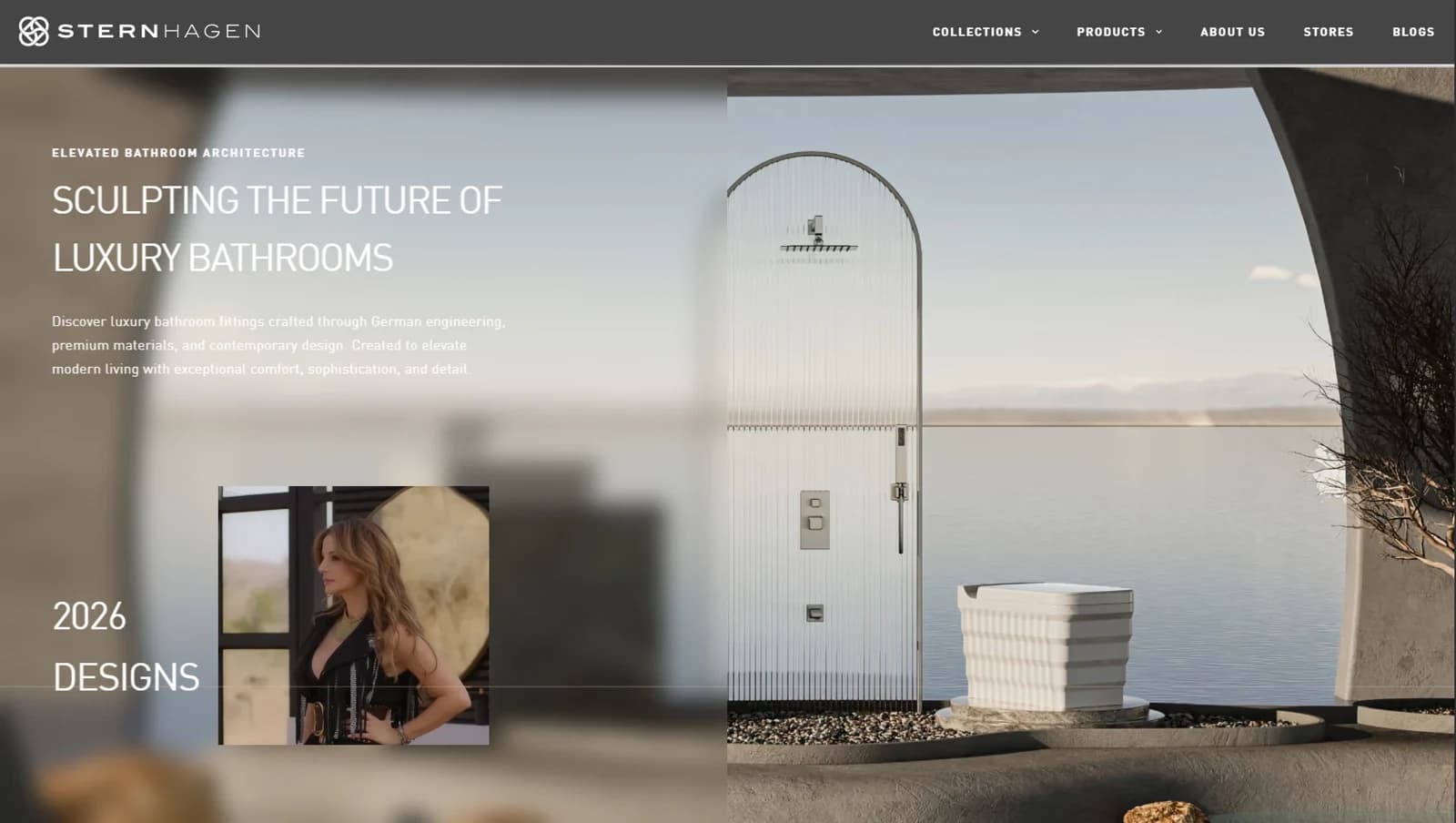 Sternhagen
 Carysil
Whether you're launching a new product, rebuilding an existing website or improving how you communicate your software's value, let's discuss what the project needs to achieve.
4.9on Clutch · 80+ reviews